
How to Choose the Right Steam Vortex Flow Meter Pipe Size?
In steam system design and retrofitting, pipe sizing may seem straightforward — but it’s one of the most critical factors affecting system performance and stability. Many common issues in steam systems — such as pressure fluctuations, poor heat efficiency, and water hammer — often trace back to one simple cause: improper pipe sizing. The Impact of Incorrect Pipe Sizing Sizing errors typically fall into two categories:Pipes that are too large, or too small. 1. Oversized Pipes Engineering Reference: 2. Undersized Pipes As you can see, both oversized and undersized pipes come with serious downsides.So how can you determine the right pipe size for your steam system?Let us see as following:
Selection of Vortex Flow Meter Structures
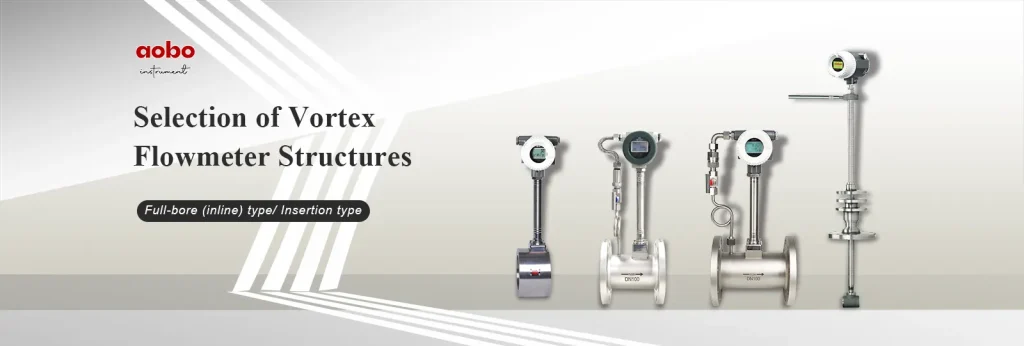
1. Overview In steam flow measurement, Differential Pressure (DP) Flowmeters and Vortex flowmeters are the two main types in use today. However, when it comes to vortex flowmeters, choosing between inline (full-bore) and insertion-type designs has long been a common dilemma in engineering applications.The core issue lies in finding a balance between the vortex principle’s dependence on high Reynolds numbers and the practical considerations of cost and installation economics. So, how should one make the right choice? 2. Principle Analysis A Vortex Fflowmeter is based on the Kármán vortex street principle, where the vortex shedding frequency is linearly proportional to the fluid’s average velocity: where St is the Strouhal number, v is the average flow velocity, and d is the characteristic width of the bluff body. The discovery of the vortex phenomenon by Strouhal and the concept of the Reynolds number by Reynolds together laid the foundation for modern vortex flowmeters.However, the principle comes with a limitation: linearity between the vortex frequency and flow rate only holds when the Reynolds number is above 40,000 (Re ≥ 4×10⁴). At larger pipe diameters, the vortex shedding coefficient decreases, and in some cases, vortex shedding may even be lost entirely. 3. Evolution of Structural Designs Early vortex flowmeters were typically used in pipe sizes ranging from DN50 to DN300. As industrial applications expanded, the demand for large-diameter measurement of steam, compressed air, and process gases grew rapidly.To overcome the limitations of the vortex coefficient in large diameters, the insertion-type vortex flowmeter was developed. Although the insertion type provides lower accuracy, it is adequate for most process monitoring applications, while its cost is only about one-third to one-half that of a full-bore design of the same size. Meanwhile, advances in mechanical machining and electronic detection technology have significantly reduced the difficulty of manufacturing small-diameter full-bore vortex meters, greatly improving signal accuracy. As a result, the applicable range of full-bore vortex flowmeters has expanded to DN8–DN500, while insertion-type designs remain the practical choice for pipe sizes above DN500. 4.Design Considerations for Large-Diameter Applications It is well known that the meter coefficient (K) of a vortex flowmeter decreases sharply with increasing pipe diameter—approximately proportional to the cube of the diameter (K ∝ D⁻³).This causes a significant drop in resolution. To mitigate this effect, insertion-type vortex flowmeters were introduced for large-diameter applications, though at the expense of some measurement accuracy. This raises a question: if insertion types are available, why not use them across all diameters? First, full-bore vortex flowmeters offer higher measurement accuracy, better repeatability, and superior long-term stability. Their results are more consistent and reliable over time. Second, from a fluid dynamics standpoint, the pipe frictional resistance can be expressed as: According to the Darcy–Weisbach equation, when the flow coefficient n remains constant, a smaller pipe diameter D leads to higher wall friction, resulting in greater velocity gradients across the cross-section. Moreover, small-diameter flows naturally exhibit lower Reynolds numbers. Inserting a probe into such a flow further disturbs the velocity field, reducing the Reynolds number even more and deteriorating the vortex shedding behavior. In these conditions, a single-point velocity measurement cannot accurately represent the average flow velocity of the entire cross-section, introducing additional errors. Finally, when a full-bore structure can be used, it not only ensures accuracy but also provides stable and repeatable measurements. Switching to an insertion-type design in these cases would reduce accuracy and increase installation complexity—offering little benefit in return. 5. Conclusion
Energy Saving & Carbon Reduction | Ultrasonic Flow Measurement Technology: The Perfect Choice for Thermal Power Plant Heating Systems!
Recently, the “2024-2025 Energy Saving and Carbon Reduction Action Plan” was officially released. This policy document emphasizes the urgency of heating measurement reform and explicitly calls for the promotion of heat-based billing models. With the push of this policy, the importance of ultrasonic flow measurement technology has become even more pronounced. Not only is it the key to achieving accurate heating measurement, but it also plays a crucial role in helping heating systems move toward energy-saving and carbon-reduction goals. Ultrasonic Flow Measurement Technology: An Essential Tool for Energy Saving and Carbon Reduction in Heating Systems Ultrasonic flow measurement technology offers a reliable solution for heating measurement with its high accuracy and low energy loss. By measuring the time difference of ultrasonic signals traveling through the fluid, this technology can precisely capture the fluid’s flow rate and flow, providing accurate data support for the energy distribution in heating systems. This is crucial for ensuring efficient operation, optimizing energy distribution, and reducing energy waste in heating systems. Ultrasonic Flow Measurement Technology: Designed for “Green” Ultrasonic Heat Meters In “smart heating” systems, sensors based on ultrasonic measurement technology act as precise “thermometers,” accurately measuring the flow rate and flow of hot water. The sensors calculate flow speed based on the time difference of ultrasonic signals in both downstream and upstream directions. Combined with temperature sensors, the system computes the total heat consumption. This high-precision measurement enables heating systems to more accurately control heat distribution, effectively preventing energy waste. Weifang Aobo Instrument: Technological Innovation Driving Development For over 20 years, Weifang Aobo Instrument has focused on technological research and innovation, developing a series of new products tailored to market needs. The company has obtained numerous invention patents and utility model patents. Weifang Aobo has been awarded the title of “Specialized, Refined, Special and New” small and medium-sized enterprise in Shandong Province and “Hidden Champion” enterprise in Weifang City. It leads the industry in quality and service, demonstrating both innovation and exemplary practices. Through the tireless efforts of our R&D team, and leveraging years of on-site experience with flow meters, combined with the actual working conditions of domestic heating systems, we continuously innovate and improve existing products. Our self-developed dual-channel ultrasonic flow meter, which features strong anti-interference, bubble resistance, and online maintenance without flow interruption, has been widely recognized by our clients.
Measurement Challenges, Meter Reading Difficulties, Billing Issues, and Steam Theft? AOBO Instrument Has the Solution!

Steam plays a crucial role in modern industry and is widely used in heating, power generation, textiles, petroleum, chemicals, metallurgy, pharmaceuticals, food processing, and many other fields. However, steam’s applications extend far beyond these industries— it is often referred to as “the blood of industry.” Steam is essential not only in heavy industries but also in light industries and our daily lives. Its efficiency, convenience, and low cost make centralized steam supply the most common method for supporting production in industrial enterprises. However, several common issues in traditional steam trade processes often lead to disputes between steam suppliers and users. These issues include: AOBO Instrument’s Solution: In 2008, AOBO Instrument developed and launched an intelligent IC card prepaid metering control system that integrates alarm, anti-theft, and power-saving functions. This system enables a “pay first, use later” model, thoroughly addressing the challenges of billing, meter reading, and management in thermal power plants. It has been widely adopted in the heating and power supply industry, receiving widespread praise and generating both economic and social benefits. AOBO Instrument’s Steam Trade Metering System uses a modular metering approach and is composed of components such as an intelligent electric control valve, vortex flow sensor, temperature sensor, and pressure transmitter. The system’s functions include:
Steam metering Application | Steam Prepayment Metering System
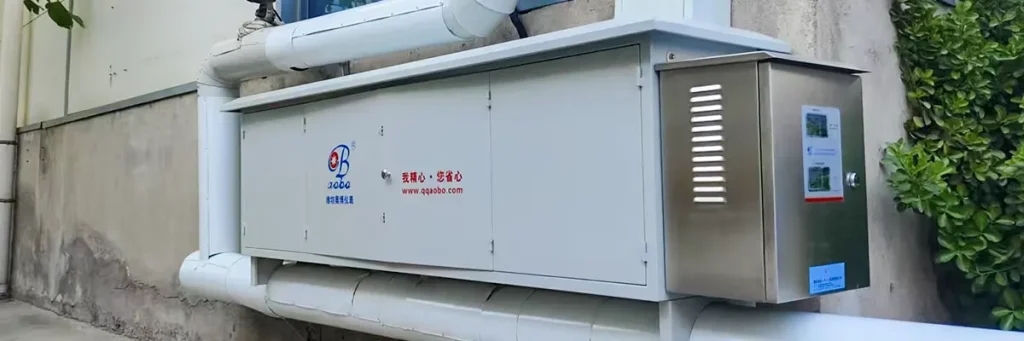
The Challenge: Billing Issues, Poor Management, and Significant Losses A few years ago, a power plant in Liaocheng was responsible for supplying industrial steam to a large number of clients. Due to the small steam consumption of each client and issues with initial flow meter selection, there were major discrepancies in steam measurement. This resulted in massive energy losses, which negatively impacted the plant’s revenue and management efficiency. Vortex Flow Meters to the Rescue After learning about the plant’s challenges, we quickly deployed a team of experts to assess the situation on-site. Through our investigation, we identified several areas for improvement: incorrect meter selection, inadequate insulation, theft prevention issues, and weak monitoring systems. The most critical issue, however, was the steam metering equipment. By replacing the old meters with our high-precision vortex flow meters, we were able to address these problems head-on. Our solution was approved, and we proceeded to upgrade the meters for nearly 80 steam users across the plant. Significant Results: Reduced Losses and Improved Profits Once the project was completed, the plant saw immediate improvements. With the new vortex flow meters in place, steam usage became much more accurate, and the management system was significantly strengthened. As a result, the pipeline loss rate dropped from 50% to less than 8%, dramatically reducing energy waste and boosting operational efficiency. Thanks to the precision of our vortex flow meters and the revamped management approach, the power plant was able to solve its long-standing loss issues while improving overall operations and customer satisfaction.
Wastewater Treatment Applications
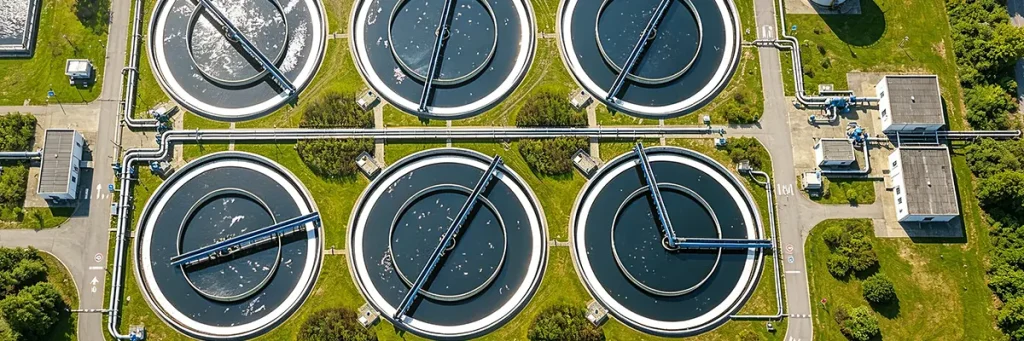
In recent years, the scattered nature of textile dyeing enterprises and the concentration of salt chemical industries, have negatively impacted the surrounding community’s living environment. In response, the government has been progressively relocating enterprises based on their scale, closing down small, non-compliant businesses, and addressing issues of illegal wastewater discharge. This has become a highly voiced concern among local residents. To tackle this, coastal industrial parks have built sewage treatment plants, and wastewater pump stations have been constructed in areas with high concentrations of enterprises to manage and discharge wastewater in a unified manner. This project was successfully implemented by Weifang Xinhui Waterworks Municipal Sewage Treatment Plant. In this project, XX Company was responsible for the metering of wastewater at the park’s pump stations and the incoming sewage treatment plant. The company successfully addressed issues related to inaccurate metering and instrument corrosion resistance. The accuracy of the metering instruments was controlled within 0.5%, ensuring reliable wastewater discharge monitoring and effective management.